
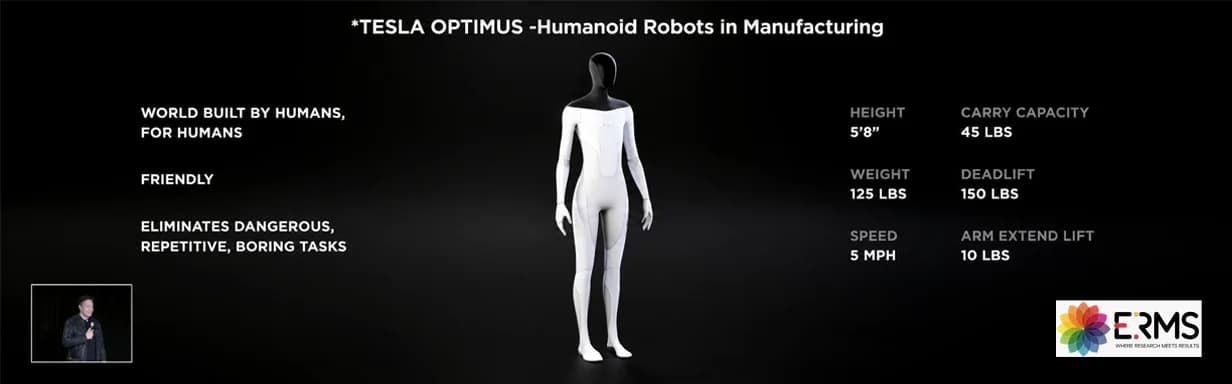
Tesla's Optimus V3 mass production launches summer 2026. Learn how humanoid robots are revolutionizing manufacturing automation and addressing critical labor shortages globally.
The manufacturing sector stands at an inflection point. Global worker shortages, rising labor costs, and skills gaps are forcing manufacturers to rethink their operational models. While traditional robotic automation has delivered rigid efficiency, it lacks the adaptability modern supply chains demand. Enter intelligent humanoid robots—a paradigm shift in how we approach manufacturing challenges.
The emergence of general-purpose humanoid robots, particularly Tesla's Optimus (Tesla Bot), signals a transformative era. Unlike purpose-built industrial robots confined to single tasks, humanoids bring human-like dexterity, cognitive flexibility, and the ability to navigate unstructured factory environments. With mass production of Optimus V3 set to launch in summer 2026, this technology is no longer speculative—it's becoming operational reality.
This blog explores how humanoid robots address critical manufacturing challenges, the Tesla Optimus ecosystem, and what this means for Industry 4.0 and Industry 5.0 adoption.
The Manufacturing Workforce Crisis: Why Humanoids Matter
Current Industry Challenges
Manufacturing faces unprecedented headwinds:
- Worker Shortage: Aging workforces in developed economies, immigration restrictions, and declining vocational training have created acute labor gaps. The U.S. manufacturing sector alone reports 500,000+ unfilled positions.
- Skill Gaps: Complex assembly and quality control tasks require specialized training, yet fewer workers pursue manufacturing careers. Reskilling programs are expensive and time-consuming.
- Unsafe Conditions: Repetitive strain injuries, exposure to hazardous materials, and physically demanding tasks create workplace safety liabilities and reduce workforce retention.
- Cost Inflation: Rising wages and benefits, combined with supply chain volatility, compress manufacturing margins.
Traditional automation addressed these through rigid, task-specific robots—but with severe limitations. A welding robot can't handle assembly. A packaging robot can't perform quality inspection. Each task required a new machine, capital investment, and factory redesign.
Why Humanoid Robots Are Different
Humanoid robots introduce a critical capability: adaptability. A single humanoid can:
- Perform multiple tasks within the same shift
- Handle unexpected scenarios through machine learning
- Work alongside human employees in shared spaces
- Be retrained for new tasks without hardware changes
- Operate in environments designed for human workers
This flexibility collapses the automation equation. Instead of high upfront capital for rigid systems, manufacturers get scalable, retrainable labor that doesn't need healthcare, pensions, or vacation days.
Tesla Optimus: The General-Purpose Humanoid Reshaping Manufacturing
What Is Tesla Optimus?
Tesla Optimus (Tesla Bot) is a 5'8" humanoid robot designed to perform tasks humans find repetitive, dangerous, or tedious. Developed by Tesla's Autopilot and AI teams, Optimus represents a convergence of:
- Advanced Robotics: Human-like joints, grip strength, and balance for natural locomotion
- Machine Vision: Real-time 3D perception and object recognition
- AI & Learning: Neural networks that learn tasks from demonstration
- Edge Computing: On-device processing for real-time decision-making
Optimus in the Tesla Ecosystem
Elon Musk has positioned Optimus as the cornerstone of Tesla's industrial future. The strategy involves:
- Internal Manufacturing Deployment: Tesla is piloting Optimus units in its Fremont and Berlin Gigafactories to automate assembly, stamping, and logistics.
- Terafab Project Integration: Tesla's upcoming mega-factory project will leverage Optimus for construction, setup, and operation—creating a self-manufacturing ecosystem.
- Third-Party Commercial Release: Tesla plans to license or sell Optimus to automotive, electronics, and consumer goods manufacturers.
- Cost Reduction Roadmap: Early units cost $150,000–$200,000; Tesla targets $25,000–$50,000 per unit within 3–5 years through scaling and iteration.
Timeline: From R&D to Mass Production
- 2023–2025: Prototype phases (Optimus Gen 1 and Gen 2) with limited factory deployment
- Summer 2026: Mass production of Optimus V3 begins, marking commercial viability
- 2027+: Expected widespread adoption across manufacturing sectors
How Humanoid Robots Transform Manufacturing Processes
Assembly & Subassembly
Humanoids excel at tasks requiring dexterity and adaptability:
- Wire harness assembly: Previously hand-intensive, now automatable with visual guidance
- Component installation: Small parts requiring precise placement and pressure feedback
- Quality checks: Visual inspection with AI-powered defect detection
- Changeover automation: When product lines shift, humanoids relearn tasks through demonstration rather than reprogramming
Industry Impact: Manufacturers report 20–40% reduction in assembly time and 50% improvement in defect detection when humanoids are deployed.
Dangerous & Repetitive Tasks
Humanoids eliminate workplace injuries by taking on:
- Material handling: Heavy lifting in foundries, stamping plants, and warehouses
- Chemical exposure: Painting, welding fume-heavy work, hazardous substance handling
- High-temperature environments: Work near furnaces, ovens, and molten material
- Monotonous operations: Hours-long packing, sorting, and palletizing
Industry 4.0 and Industry 5.0: Where Humanoids Fit
Industry 4.0 Context (Connected, Data-Driven Manufacturing)
Humanoid robots are native Industry 4.0 citizens:
- IoT Integration: Connect to factory networks for real-time coordination with other machines
- Data Streams: Generate continuous performance, efficiency, and quality metrics
- Predictive Maintenance: On-board sensors detect wear patterns, scheduling repairs proactively
- Supply Chain Visibility: Humanoids monitor inventory, flag shortages, and optimize material flow
Industry 5.0 Evolution (Human-Centric, Resilient Manufacturing)
Industry 5.0 emphasizes sustainability, resilience, and human-machine collaboration. Humanoids embody this vision:
- Human Augmentation: Humanoids handle dangerous/repetitive tasks; humans focus on creativity, problem-solving, quality oversight
- Customization: Human workers guide humanoids for personalized or small-batch production
- Resilience: Flexible labor pools that scale with demand without layoffs during downturns
- Sustainability: Reduced physical strain on human workers extends careers and improves retention
Key Advantages of Humanoid Manufacturing Automation
Advantage
Traditional Automation
Humanoid Robots
Flexibility
Task-specific, rigid
Multi-task, adaptive
Reconfiguration
Weeks or months
Days (retraining)
Capital Cost
Very high (per task)
High (per unit, amortized across tasks)
Space Requirements
Redesign factory layouts
Works in human-designed spaces
Safety
Reduces human exposure
Near-total elimination
Skill Transfer
Complex programming
Demonstration learning
Scalability
Decreases (complexity)
Increases (modular, replicable)
Challenges & Limitations: The Realistic View
Technical Hurdles
- Dexterity in Variability: While humanoids handle expected scenarios well, novel or partially damaged parts still challenge their perception systems.
- Real-Time Cognition: On-device AI is advancing, but complex decision-making under uncertainty remains computationally expensive.
- Reconfigurability: Teaching humanoids new tasks at scale requires standardized training methodologies—still in development.
Operational & Organizational Challenges
- Workforce Transition: Redeploying displaced workers and upskilling them for higher-value roles requires investment and cultural change.
- Integration Complexity: Retrofitting existing factories with humanoids demands infrastructure upgrades, network reliability, and change management.
- Regulatory & Safety Standards: Governments are developing humanoid workplace regulations—compliance frameworks are still nascent.
- Digital Twin Adoption: Managing humanoid operations effectively requires digital twin technology—a capability gap many manufacturers face.
The Role of Digital Twins in Humanoid Manufacturing
Digital twins—virtual replicas of physical systems—are emerging as critical enablers for humanoid deployment:
- Simulation & Testing: Model humanoid tasks before physical deployment, reducing errors and training time
- Optimization: Test multiple configurations, routes, and strategies virtually to maximize efficiency
- Predictive Analytics: Forecast performance, identify bottlenecks, and plan maintenance
- Remote Operation: Human operators can supervise or intervene through digital twin interfaces
Manufacturing leaders deploying humanoids are simultaneously investing in digital twin platforms to manage complexity.
Tesla Optimus V3: What's New in 2026
Anticipated Improvements
- Computational Efficiency: Faster AI inference, better real-time response to environmental changes
- Battery Life: Extended shift operation (8–12 hours) reducing charging downtime
- Precision Gains: Improved vision systems for micro-assembly tasks
- Cost Reduction: Manufacturing scale bringing per-unit costs down 15–20% from Gen 2
Real-World Early Deployments
- Tesla Fremont Factory: Optimus units handling component kitting, light assembly, and quality inspection
- Semiconductor Manufacturers: Pilot programs with precision wafer handling and cleanroom logistics
- Automotive Suppliers: Testing humanoids for wire harness assembly and subassembly operations
Future Outlook: The Humanoid-Driven Manufacturing Ecosystem
Near-Term (2026–2028)
- Humanoid adoption in automotive, electronics, and consumer goods accelerates
- Third-party manufacturers release competing products (Boston Dynamics, Figure AI, Unitree)
- Standardized training and reconfiguration frameworks emerge
- First cost-benefit studies demonstrate ROI in high-wage, high-turnover sectors
Medium-Term (2028–2032)
- Humanoid costs drop below $50,000, making adoption economically viable in mid-tier manufacturing
- Integration with Industry 5.0 systems becomes mainstream
- Workforce development programs scale to retrain displaced manufacturing workers
- Regulatory frameworks stabilize globally
Long-Term (2032+)
- Humanoid robots become as commonplace in factories as traditional automation
- Manufacturing becomes a hybrid ecosystem of specialized robots, humanoids, and human expertise
- Supply chain resilience improves through flexible, distributed production models
What This Means for Your Manufacturing Strategy
If you operate in manufacturing or supply chains, humanoid automation warrants strategic consideration:
- Assess Your Processes: Identify roles dominated by repetitive, unsafe, or skill-scarce tasks—prime humanoid candidates
- Plan Infrastructure: Begin digital twin and IoT readiness assessments; these are foundational for humanoid integration
- Rethink Workforce: Shift talent strategy from low-skill repetition toward supervision, maintenance, and quality oversight roles
- Monitor Technology: Watch Tesla Optimus V3 deployments; early adopter case studies will clarify ROI timelines and best practices
- Partner & Learn: Explore pilot programs with humanoid manufacturers to test concepts on small production runs
Conclusion
Intelligent humanoid robots represent a genuine inflection point for global manufacturing. Unlike incremental automation improvements, humanoids address the fundamental challenge of flexibility—delivering adaptive labor that combines machine efficiency with human-like dexterity.
Tesla's Optimus, launching into mass production in summer 2026, is not just a technological achievement; it's proof that the humanoid manufacturing era has begun. The manufacturers who adapt earliest—investing in digital infrastructure, rethinking workforce development, and piloting humanoid workflows—will capture disproportionate competitive advantages.
The question for manufacturing leaders isn't whether humanoids will transform their industry, but when and how quickly they'll integrate them into operations.
Need custom research? ERMS Intelligence delivers actionable market intelligence for manufacturing, automation, and advanced technologies. Contact our research team to discuss your specific challenges.
Keywords: Humanoid robots, manufacturing automation, Tesla Optimus, Industry 4.0, Industry 5.0, intelligent automation, assembly automation, worker shortage, flexible automation, digital twin, robotic process automation, manufacturing technology.
Disclaimer: This content is based on publicly available information and industry analysis current as of June 2026. Technology specifications, timelines, and market projections are subject to change.
Looking Ahead
Stay tuned for more updates on this topic as we continue to monitor market trends and technological advancements.