
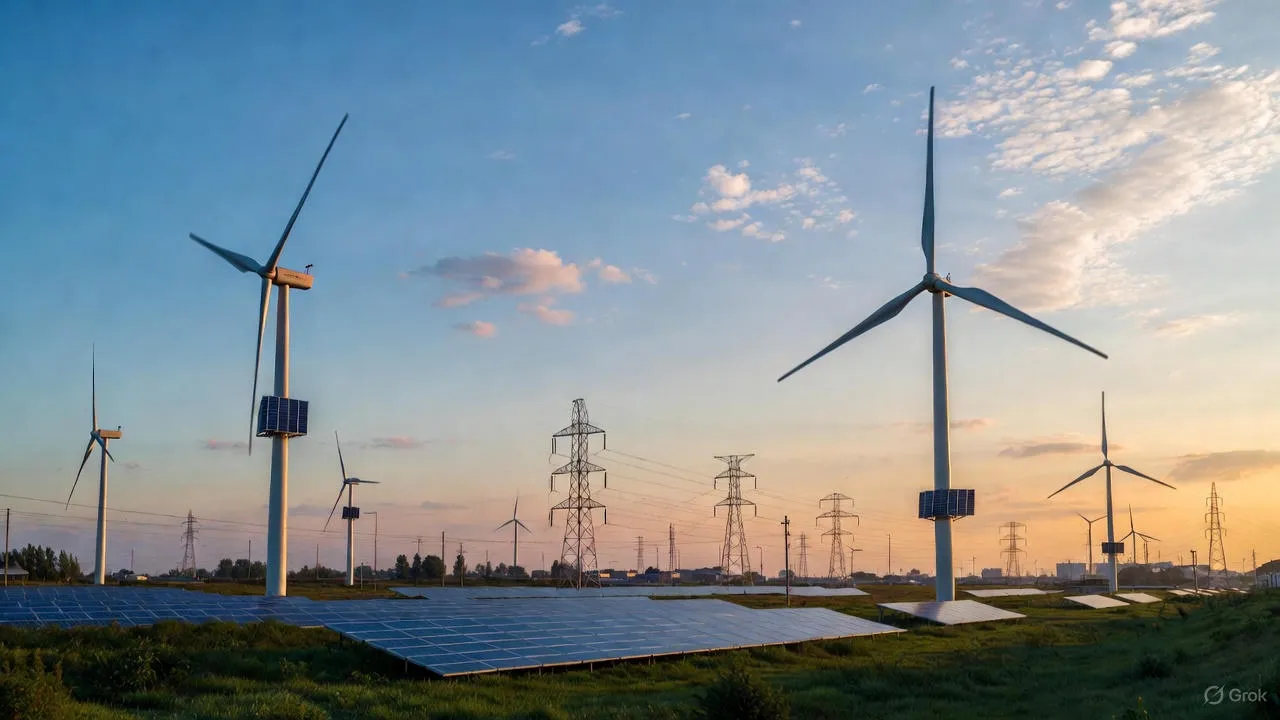
The global lithium-ion battery market was valued at USD 134.08 billion in 2025 and is projected to reach USD 865.33 billion by 2032, registering a CAGR of 22.85%. Growth is driven by accelerating EV adoption, renewable energy storage mandates, falling battery costs, gigafactory expansions, and advancements in solid-state technologies.
Global Lithium-Ion Battery Market Overview
The global lithium-ion battery market was valued at approximately USD 134.08 billion in 2025 and is projected to grow from USD 206.98 billion in 2026 to USD 865.33 billion by 2032, exhibiting a CAGR of 22.85% during the forecast period. The market is experiencing exponential expansion driven by electrification trends, large-scale manufacturing investments, and rapid technological advancements.
Lithium-ion batteries are widely used across electric vehicles (EVs), energy storage systems (ESS), consumer electronics, and emerging aviation applications. Their high energy density, long cycle life, and declining cost structure position them as the dominant energy storage technology globally.
Key Market Growth Drivers
Electric Vehicle (EV) Adoption
The automotive sector represents the largest application segment, supported by accelerating EV adoption worldwide. EV sales are projected to grow by approximately 80%, significantly increasing battery demand.
- Government EV mandates and subsidies
- Expansion of EV charging infrastructure
- Shift toward electrified public and commercial transport
- Strong OEM partnerships and battery supply agreements
Renewable Energy Storage and Grid Stability
The rapid integration of renewable energy sources such as solar and wind is increasing the need for efficient energy storage systems to manage intermittency and ensure grid reliability.
- Growing deployment of large-scale ESS projects
- Government mandates for renewable energy storage
- Support for microgrids and distributed energy systems
- Integration with smart grid technologies
Technology Advancements
Advancements in battery chemistry, manufacturing optimization, and AI-driven production processes are enhancing performance and scalability.
- Declining costs of LFP and NMC battery chemistries
- Development of solid-state battery technologies
- 4680 cell innovations and manufacturing efficiency improvements
- AI-driven manufacturing optimization
Regional Insights
Asia-Pacific dominates the global lithium-ion battery market, holding more than 56% market share in 2025. The region benefits from strong manufacturing capacity, policy incentives, and the presence of leading battery manufacturers.
- China’s dominance led by CATL and BYD
- India’s Production Linked Incentive (PLI) schemes
- Gigafactory expansions across Asia
- Strong export capacity of battery packs
Policy and Regulatory Landscape
Global policies are reshaping the battery supply chain, encouraging localization, recycling, and sustainable sourcing of raw materials.
- Extension of the U.S. Inflation Reduction Act (IRA)
- EU Battery Passport regulations
- China’s 4680 cell initiative
- Battery recycling reforms and second-life applications
Emerging Business Models
Innovative models such as Battery-as-a-Service (BaaS) are transforming the value chain by reducing upfront EV costs and optimizing lifecycle management.
- Battery leasing models for EV fleets
- Second-life battery applications in stationary storage
- Growth of battery recycling ecosystems
- Exploration of alternative chemistries such as sodium-ion
Competitive Landscape
The lithium-ion battery market is highly competitive, characterized by gigafactory investments, strategic partnerships, and large-scale capacity expansions.
- Expansion of global gigafactories exceeding 1.5 TWh production in 2025
- Strategic OEM supply agreements
- Investment exceeding USD 500 billion globally
- Vertical integration across raw materials and manufacturing
Strategic Market Intelligence Perspective
The global lithium-ion battery market is entering a scale-driven phase marked by rapid capacity expansion, supply chain localization, and technological innovation. Tracking raw material trends, production capacities, and policy changes is essential for maintaining competitiveness.
Lithium-Ion Battery Intelligence enables OEMs, utility companies, and investors to identify technology gaps, optimize procurement strategies, and align investments with the global electrification transition.
Conclusion
Driven by EV acceleration, renewable energy integration, and large-scale manufacturing investments, the global lithium-ion battery market is poised for transformative growth through 2032. Continued innovation in chemistry, recycling, and business models will shape the next decade of energy storage development.
Looking Ahead
Stay tuned for more updates on this topic as we continue to monitor market trends and technological advancements.
Lithium-Ion Battery MarketEV Battery MarketEnergy Storage SystemsGigafactory ExpansionBattery Recycling