
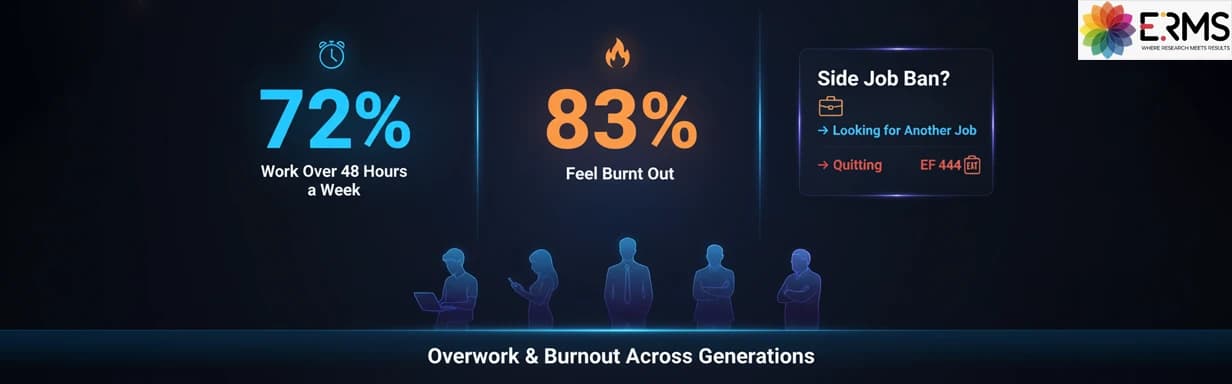
India's workplace burnout crisis isn't generational—it's systemic. Surprising data shows 72% of professionals work 48+ hour weeks while 83% experience burnout across ALL age groups. Yet organizations persist with age-specific HR policies missing the real culprits: toxic culture, poor boundaries, and workload misalignment. This analysis reveals why the generational narrative fails and what evidence-based change actually looks like for Indian businesses competing globally.
A data-driven analysis of the Indian workplace crisis—72% overwork, 83% burnout, and why traditional generational explanations fall short
India's professional workforce is at a critical inflection point. Recent findings reveal a crisis that transcends generational boundaries: across Gen Z, Millennials, Gen X, and Boomers, workplace pressures manifest in strikingly similar patterns. Understanding this phenomenon is not merely an HR concern—it signals deeper structural issues in how Indian businesses operate, compete, and value human capital.
The Numbers: A Workforce Under Strain
Recent survey data from verified working professionals in India paints an alarming picture:
Metric
Data
Work weeks exceeding 48 hours
72% of Indian professionals
Burnout experience
83% across all age groups
Quiet disengagement response
39% Gen Z & Gen X, 33% Millennials
The consistency of these metrics across demographic groups signals something critical: burnout in India is not a generational issue—it's a systemic one.
Myth vs. Reality: Generational Disengagement
A commonly cited narrative in Indian workplaces frames overwork and disengagement as generational problems: Gen Z is said to lack commitment, Millennials to be job-hoppers, Gen X to resist change, and Boomers to be out of touch. Survey data contradicts this assumption entirely.
When faced with toxic workplace conditions, employees across all generations respond similarly. The most common response is "quiet disengagement"—performing minimum duties while mentally and emotionally checked out. This suggests that burnout and disengagement stem not from age-based differences in work ethic or attitude, but from shared exposure to unhealthy workplace cultures.
As one professional noted: "It's all mindset." That mindset, however, is shaped far more by management practices and organizational culture than by birth year.
Root Causes: Where the Real Problem Lies
Burnout and overwork rarely stem from a single cause. In Indian workplaces, several interconnected factors drive the crisis:
- Poor Boundary Management: After-hours messages are normalized. Approximately half of surveyed professionals acknowledged that late-night communication is sometimes necessary but often abused. One-quarter perceive these messages as a sign of weak management—a red flag that leadership hasn't established clear working norms.
- Workload Misalignment: When 72% of employees consistently exceed 48-hour work weeks, the root issue is insufficient staffing, poor task prioritization, or unrealistic deadlines—not employee laziness.
- Rigid Control Mechanisms: Restrictions on side work or entrepreneurial activity trigger similar disengagement patterns across age groups. When employees feel micromanaged or trapped, engagement collapses regardless of generation.
- Lack of Psychological Safety: Toxic workplace experiences correlate strongly with burnout. When employees fear retaliation, judgment, or unfair treatment, they disengage—a universal human response, not a generational one.
- Absence of Career Development: Burnout intensifies when employees see no path for growth. When work feels repetitive with no skill advancement, engagement declines across all age groups.
The Business Case for Change: Why This Matters Now
Ignoring this crisis carries quantifiable costs:
- Productivity Loss: Quiet disengagement—the reported coping mechanism for 39% of Gen Z and Gen X—means employees work mechanically, contributing minimally to innovation, problem-solving, or quality improvement.
- Turnover Acceleration: Burnout is a leading driver of voluntary departures. Replacing a skilled professional costs 50–200% of annual salary in recruitment, training, and lost productivity.
- Talent Market Deterioration: In competitive sectors, employee experiences become reputation signals. High-burnout organizations struggle to attract top talent, facing longer hiring cycles and lower-quality candidates.
- Operational Fragility: Disengaged workforces respond poorly to crises, market shifts, or strategic pivots. Agility requires trust and psychological safety—both eroded by chronic burnout.
- Health & Liability Risks: Stress-related illness claims rise in burned-out workforces, increasing insurance costs and creating liability exposure.
Strategic Responses: What Effective Organizations Are Doing
Organizations successfully addressing burnout don't adopt age-specific HR policies. Instead, they implement systemic changes:
- Redefine Working Hours: Shift from presence-based to outcome-based work. Set clear expectations about after-hours communication and enforce them uniformly. This single change reduces perceived overtime while improving work quality.
- Right-Size Teams: Conduct workload audits to ensure staffing matches demand. When individuals consistently exceed 48-hour weeks, hiring is a productivity investment, not a cost burden.
- Foster Psychological Safety: Create environments where employees can voice concerns, experiment, and sometimes fail without fear. This is foundational to re-engagement.
- Establish Clear Pathways: Transparent career progression, skill development opportunities, and mentorship programs signal that growth is possible.
- Permit Autonomy: Progressive organizations allow side projects and entrepreneurial pursuits within ethical bounds. This autonomy builds trust and prevents the sense of being trapped.
- Measure and Communicate Progress: Regular burnout surveys, transparent action on findings, and public accountability improve culture faster than aspirational statements.
The Opportunity: Competitive Advantage Through Culture
Organizations that solve the burnout crisis gain measurable advantages:
- Talent Attraction: Progressive cultures attract ambitious professionals seeking growth and respect.
- Productivity & Innovation: Engaged employees contribute discretionary effort and creative problem-solving.
- Lower Turnover: Reduced churn improves institutional knowledge and team cohesion.
- Market Reputation: Employer brand becomes a competitive asset in talent markets.
The Path Forward
The data is clear: workplace burnout in India is not a generational problem requiring age-specific solutions. It's a cultural and structural problem requiring organization-wide commitment.
The uniformity of burnout across Gen Z, Millennials, Gen X, and Boomers should focus leadership attention on root causes: workload management, boundary setting, psychological safety, and authentic growth opportunities. When these foundations are strong, engagement improves regardless of age.
For Indian organizations aspiring to compete globally and retain talent, the burnout crisis is not a nice-to-have HR initiative—it's a strategic imperative.
Assess Your Organization's Culture
Does your organization struggle with burnout, disengagement, or high turnover? ERMS Intelligence specializes in workplace culture diagnostics, benchmarking studies, and strategic HR transformation. Our research-backed assessments identify root causes and guide evidence-based change.
Contact our research team to discuss custom studies tailored to your industry and challenges.
Looking Ahead
Stay tuned for more updates on this topic as we continue to monitor market trends and technological advancements.